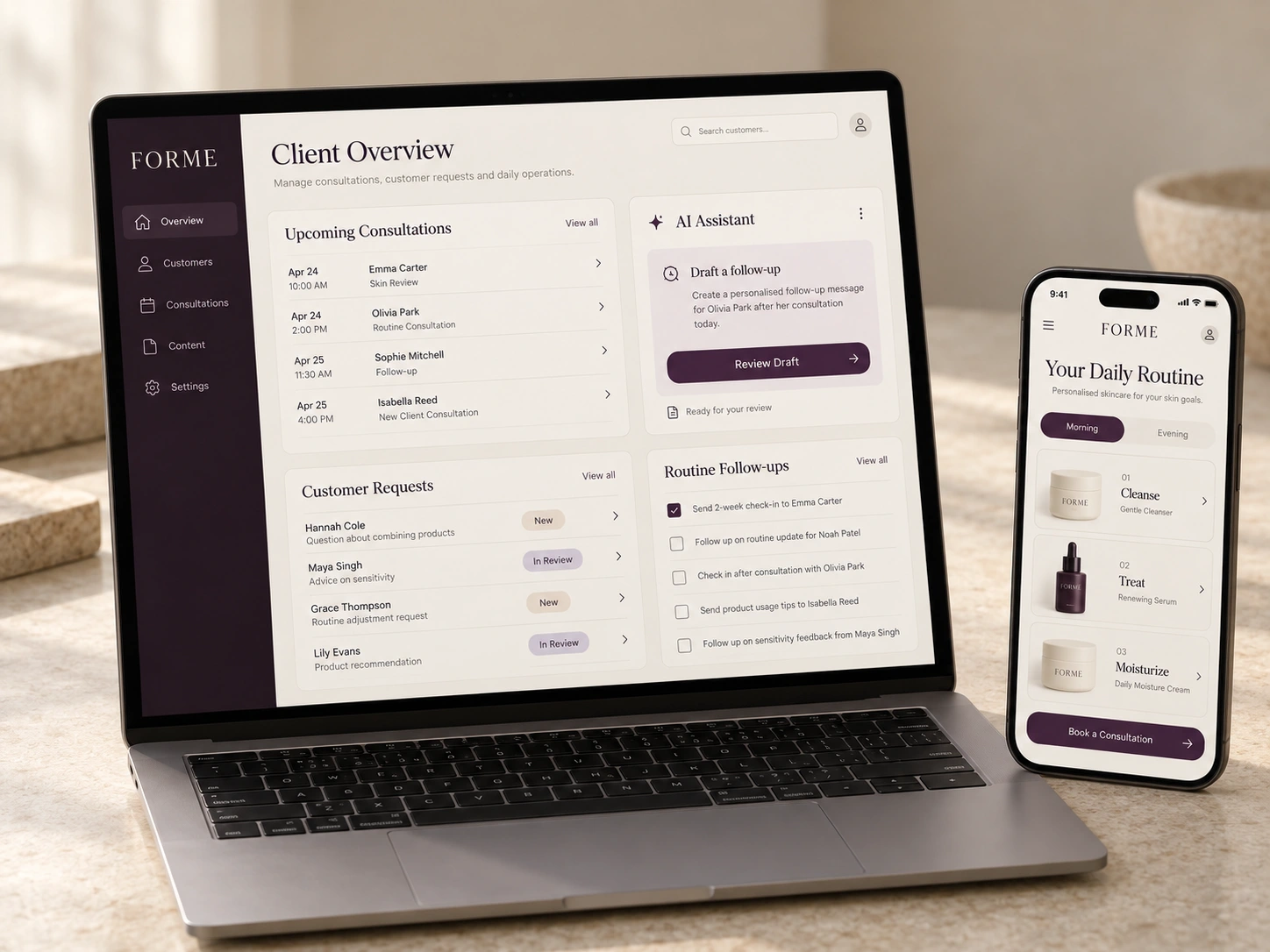
The most useful starting point for AI is often an ordinary business problem: information that is difficult to find, follow-ups that take too long to prepare, or the same question arriving every day.
Before deciding what to build, describe the task, the people involved, and what a better outcome would look like.
Find the Friction First
Ask your team where work gets repeated, delayed, or passed between several tools. Choose one task you can observe closely.
For example, preparing a customer follow-up might involve reading consultation notes, finding relevant product information, and drafting a message. An assistant could help prepare a first draft for someone to check and personalize.
Decide What Kind of Tool the Task Needs
Some problems need a clearer process or a simple automation. Others may benefit from AI’s ability to work with language, summarize information, or help organize an initial response.
If the task follows fixed rules, a straightforward workflow may be easier to manage. If it requires interpretation, define where a person needs to review the result. A custom app or dashboard can bring those steps into one place when that solves a real usability problem.
Define the Boundaries
Be clear about what the tool can access, what it can produce, and which actions need approval. Consider whether customer or business information is appropriate to use in the chosen system.
For customer-facing work, decide who checks accuracy, tone, and relevance. A fluent draft still needs to make sense for the person receiving it.
Start With a Small Version
An MVP should help you test the essential idea. Choose one user group, one useful workflow, and a small set of features. Agree how you will judge whether it helps.
That might mean less time preparing a draft, fewer missed steps, or a simpler way to find information. Observe the work before and after the trial rather than assuming a new tool creates value.
Plan for Ownership
Someone needs to maintain the information, handle exceptions, and decide when the tool should change. Include those responsibilities in the plan from the beginning.
The goal is a useful improvement that people can understand and work with, supported by a clear reason for introducing the technology.
← Explore More Insights